Wild Camping: What do You Need to Know in 2026?
Contents
- Wild Camping Rules in the UK (Quick Summary)
- What Motorhome Wild Camping Means
- What Are the Laws for Wild Camping with a Motorhome?
- Wild Camping Rules to Follow
- Essential Gear for Wild Camping in a Motorhome
- How to Find the Best Motorhome Wild Camping Spots
- Motorhome Wild Camping in Scotland
- Changes to the NC500 and Popular Routes
- A More Realistic Approach
- Getting Started with a Motorhome
- Final Thought
Wild camping remains one of the most appealing ways to explore the UK in a motorhome. When done properly, it offers flexibility, cost savings and access to locations you simply won’t experience from a campsite.
However, motorhome wild camping is heavily restricted across most of the UK. Success comes down to understanding the law, planning properly and travelling responsibly.
This guide explains what is legal in 2026, what is not, and how to avoid common mistakes.
Wild Camping Rules in the UK (Quick Summary)
- You cannot legally stay overnight on private land without permission
- Trespass is usually civil, but can become criminal under the Police, Crime, Sentencing and Courts Act 2022
- Scotland allows wild camping on foot, not with motor vehicles
- Discreet overnight parking is sometimes tolerated, but never guaranteed
- Stay one night, leave no trace, and move on if asked
What Motorhome Wild Camping Means
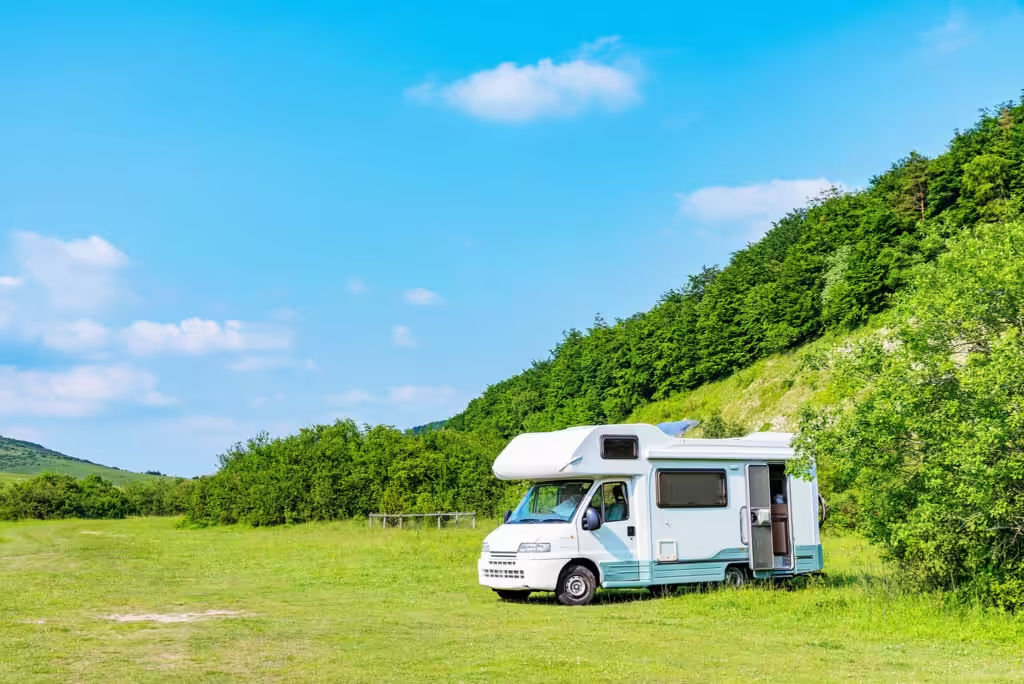
Motorhome wild camping is when you stay overnight in your vehicle outside of campsites, without access to facilities such as waste disposal, running water or electricity.
It is not the same as tent-based wild camping. In parts of the UK, particularly Scotland, traditional camping has specific access rights. These do not apply in the same way to motorhomes or campervans.
In reality, motorhome wild camping is closer to overnight parking without facilities than it is to true “camping”.
What Are the Laws for Wild Camping with a Motorhome?
The UK does not have a single unified rule, but the core principle is simple:
You do not have the automatic right to stay overnight in a motorhome on private land.
Without permission, you are trespassing.
England, Wales and Northern Ireland
- Trespass is a civil matter
- Landowners can ask you to leave at any time
Under the Police, Crime, Sentencing and Courts Act 2022, it can become a criminal offence if:
- You stay in a vehicle without permission
- You refuse to leave
- You cause damage, disruption or distress
Police can then intervene and may seize vehicles.
Scotland
Scotland operates under the Land Reform (Scotland) Act 2003, which allows responsible wild camping, but only for non-motorised access.
- Tent camping: generally permitted
- Motorhomes: no automatic right to stay overnight
The Road Traffic Act 1988 also makes it an offence to drive off-road without permission.
Wild Camping Rules to Follow
Once you have found a parking spot for your motorhome, whether its overnight or for longer, there are motorhome camping rules that you need to follow.
- Avoid building a campfire unless you find a designated spot, it can be tempting but there are too many safety risks for yourself or the land around you.
- Depending on how long you are staying for, you will need to get rid of the wastewater. Grey waste should only be disposed of at appropriate drainage points or with clear permission
- Black waste water needs to be disposed of carefully. If there are no waste disposal points available, you may have to keep hold of it until you find one.
- Avoid staying more than one night unless you have permission
- Follow the rules of the Leave No Trace ethic and don’t litter. Dispose waste responsibly and don’t leave any mess behind.
Essential Gear for Wild Camping in a Motorhome
Wild camping is all about self-sufficiency, being well-prepared can make all the difference. Here’s the top things we think you’ll need to stay safe, comfortable and responsible during your trip.
Portable Power
Campsites normally offer electric hook-ups, but when you are wild camping, you don’t have access to these, but it is still important to keep essentials like your fridge, lighting and phone charger running. Solar panels, portable battery packs and a leisure battery are all great solutions for off-grid energy.
Fresh Water & Empty Waste Tanks
It’s important that before you head off, your tanks are filled with fresh water, without this, you won’t be able to shower, clean the motorhome or even wash up! We do recommend carrying additional supplies in jerry cans or portable containers, especially if you aren’t going to be close to any refill stations.
Heating & Insulation
Proper insulation and an onboard heating system will help keep your motorhome warm and comfortable. We recommend if you don’t already have heating, consider getting a diesel or gas heater fitted, or invest in a portable electric unit.
Waste Disposal
Your motorhome should have a grey water and toilet waste tank, which should only be emptied in approved places. A good idea is to carry eco-friendly toilet paper, biodegradable soap and rubbish bags so you can make sure you leave every stop exactly how you found it.
Lighting
Lighting is essential, and without it, you may find yourself facing issues. Head torches, solar lanterns and battery powered lights are useful, especially for evening cooking and navigating outside your vehicle at night. Fairy lights are always a good option, especially battery powered ones that not only don’t require electricity but make your motorhome look pretty.
How to Find the Best Motorhome Wild Camping Spots
Finding the right place to stop depends on what you want from the experience. If you are looking for peace and quiet, aim for remote areas such as hills, forest clearings or coastal locations, away from busy roads and tourist hotspots.
It is just as important to choose locations responsibly. Avoid protected wildlife areas and do not park near water sources where your presence could cause damage or erosion.
Some people prefer to plan their stops in advance, while others rely on spontaneity and find locations as they travel. Either approach works, as long as you understand what makes a suitable and low-risk overnight spot.
To support this, there are several tools that can help you identify potential locations:
- Park4Night: One of the most widely used apps across the UK and Europe, with user-submitted locations for overnight parking, including reviews and photos
- Searchforsites: Useful for detailed listings with photos, facilities and user feedback to help you assess suitability
- Campercontact: Particularly useful for larger motorhomes or towing setups, with filters for vehicle size and access
These tools are useful for discovery, but they do not guarantee that a location is legal to stay overnight. Always assess each spot carefully and be prepared to move on if needed.
Motorhome Wild Camping in Scotland
Scotland is often seen as the most accessible place in the UK for wild camping, but this is where confusion tends to come in.
There are three key frameworks to understand:
- The Scottish Outdoor Access Code supports responsible wild camping, but this applies to people on foot and in small numbers. It does not extend to motorhomes or vehicle-based stays
- The Land Reform (Scotland) Act 2003 gives public access rights to most unenclosed land, provided you act responsibly and do not cause damage or obstruction
- The Road Traffic Act 1988 makes it an offence to drive off-road without permission, which includes many rural, coastal and open land areas
So, is it legal to wild camp in a motorhome in Scotland?
No, not without permission.
While Scotland allows wild camping in principle, this does not apply to motor vehicles. You cannot simply drive onto land and stay overnight.
In practice, some areas are more tolerant of overnight parking if:
- You stay for one night only
- You do not set up camp outside the vehicle
- You leave no trace
However, increased pressure in popular areas such as the Highlands and NC500 routes means restrictions are becoming more common.
Changes to the NC500 and Popular Routes
Motorhome travel across Scotland has increased significantly in recent years, particularly along routes such as the North Coast 500 (NC500). As a result, local councils and communities have introduced stricter controls on overnight parking in certain areas.
These include:
- Overnight parking restrictions and byelaws in some hotspots
- Height barriers in car parks to prevent larger vehicles staying overnight
- Increased enforcement around waste disposal and roadside parking
This is not a blanket ban on motorhomes, but it does mean you need to plan more carefully and rely less on informal overnight stops.
For the most up-to-date guidance, it’s worth checking official sources such as:
- North Coast 500 Ltd
- Local council websites for the areas you are travelling through
A More Realistic Approach
For most motorhome users, the best approach is to combine:
- Occasional low-impact overnight stops
- Designated motorhome stopovers or aires
- Campsites when needed for facilities
This gives you the flexibility of wild camping without the legal risk.
Getting Started with a Motorhome
If you are new to motorhome travel, understanding how off-grid stays work is key before committing to longer trips.
Many travellers choose to hire first to get familiar with:
- Vehicle size and layout
- Power and water management
- Overnight stopping etiquette
This allows you to build confidence before planning more remote routes across Scotland.
Final Thought
Wild camping in a motorhome is not about unrestricted freedom. It is about knowing where you can stop, understanding the legal boundaries, and travelling in a way that respects both the land and local communities.
Approach it properly, and it remains one of the most rewarding ways to explore Scotland.
