Best Motorhomes for Families: What to Look For
Contents
- Choosing the Best Family Motorhome
- Which Motorhome Layouts Work Best for Families?
- Check the Number and Type of Travel Seats
- Allow Enough Storage and Payload
- Family Motorhome Viewing Checklist
- Important Family Safety Features
- Recommended Vehicle Types for Families
- Find Your Family Motorhome at Dicksons of Perth
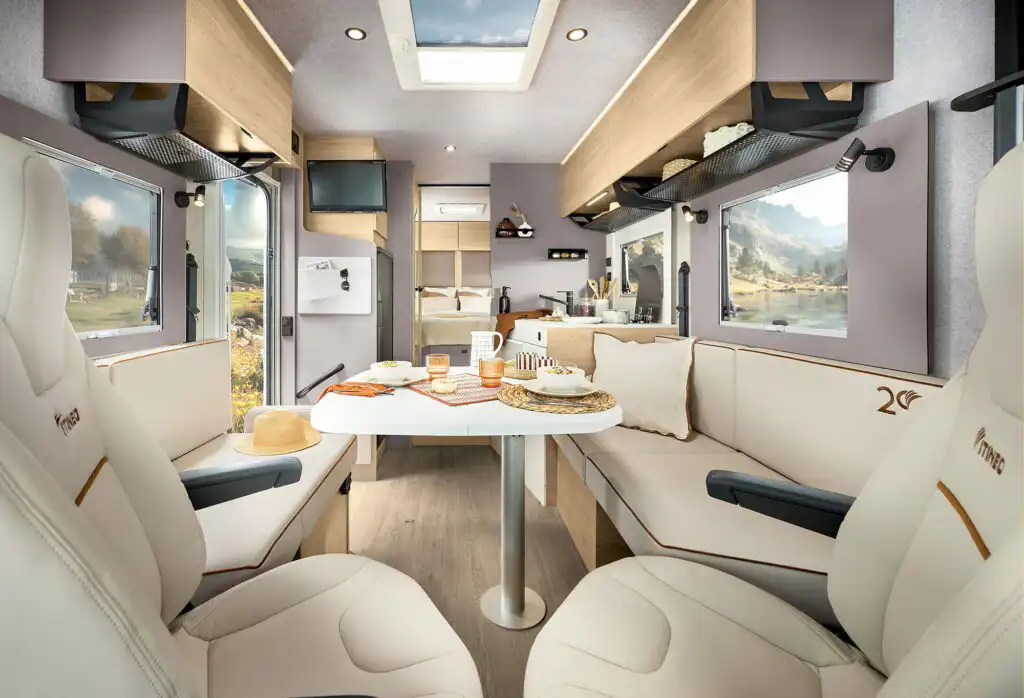
Motorhomes for families should offer more than just the right number of berths. The best models give every passenger a safe travel seat, make bedtime simple, provide enough storage for family kit and keep everyone comfortable on longer trips.
This guide focuses specifically on family motorhomes, including layouts, travel seats, payload, storage and practical viewing checks. For a broader comparison of island beds, rear lounges, fixed beds and other floorplans, read our complete guide to choosing the right motorhome layout.
How to Choose Motorhomes for Families
- A berth and travel-seat capacity suitable for everyone
- Three-point seat belts in the required passenger positions
- Beds that are practical to set up each evening
- Sufficient payload for passengers, luggage and equipment
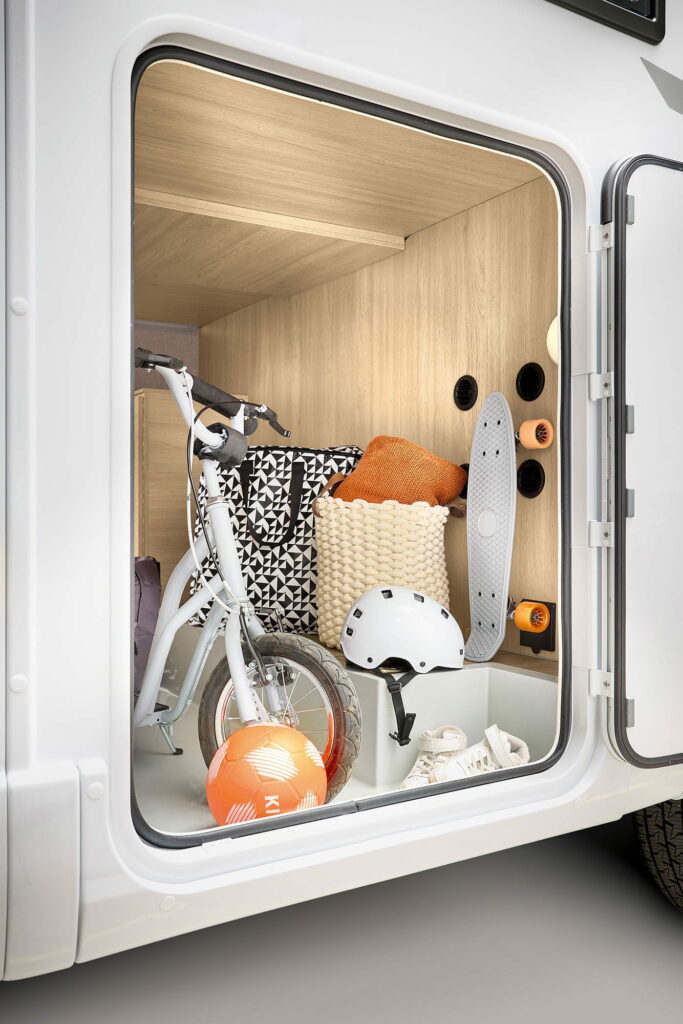
- Storage for bikes, pushchairs and outdoor gear
- A washroom and kitchen that suit longer trips
- A layout that provides usable living space on wet-weather days
- Safety features such as child locks, smoke alarms and secure storage
Four-berth motorhomes can suit smaller families, while larger families may benefit from a five or six-berth motorhome, coachbuilt or A-Class model. If you are still narrowing down your options, browsing all motorhomes for sale can help you compare different sizes, layouts and berth combinations in one place.
Which Motorhome Layouts Work Best for Families?
A well-designed layout can make the difference between an enjoyable family holiday and a vehicle that quickly feels cramped. Think about how each area will be used during the day, at mealtimes and when everyone is getting ready for bed.
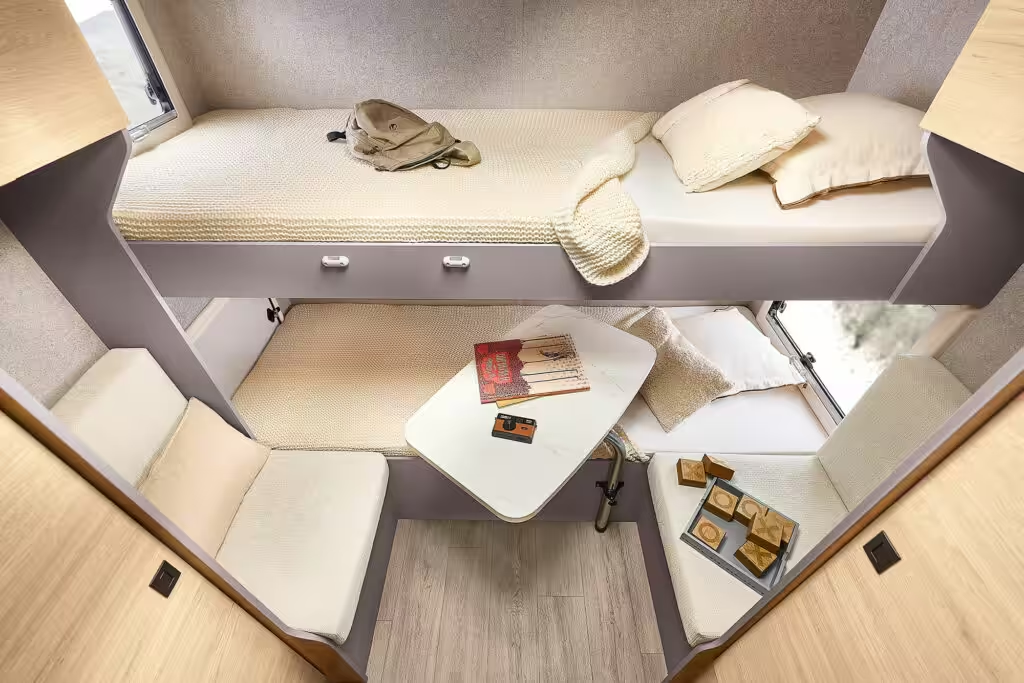
Fixed bunk beds are a popular option for families because children can have their own dedicated sleeping spaces. The bunks do not usually need to be assembled each night and may also provide children with somewhere to relax during the day.
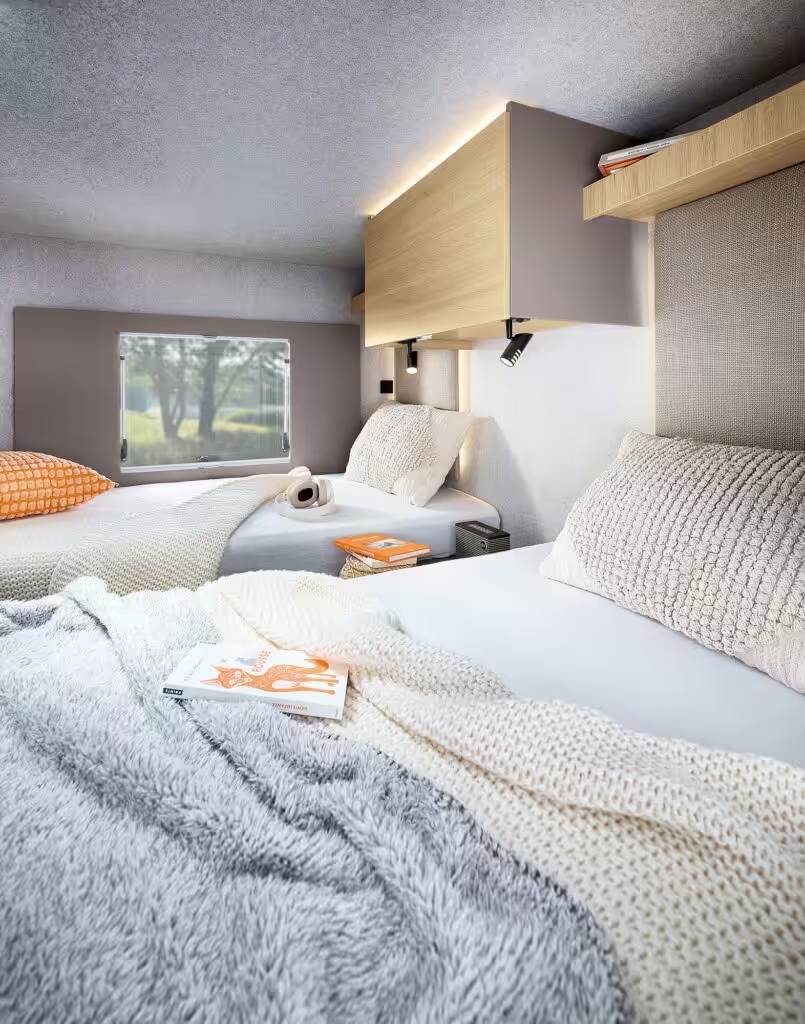
Drop-down beds are another practical option. They provide a full-sized sleeping area without permanently occupying the lounge or dining space. Overcab beds commonly found in coachbuilt motorhomes can offer similar benefits, although access by a ladder may not be suitable for very young children.
Some models use a dinette or lounge that converts into a bed. This can provide valuable flexibility, but it also means rearranging cushions and bedding every evening. Before buying, try making up the bed yourself and check whether the process would be manageable throughout a longer holiday.
Keep the layout decision family-led. Bunk beds, drop-down beds, over-cab beds and convertible lounges can all work well, but the best choice depends on your children’s ages, bedtime routines, how much kit you carry and whether you need the lounge to stay usable once the beds are made up.
Check the Number and Type of Travel Seats
A vehicle described as a six-berth motorhome will not necessarily have six designated belted travel seats. The berth figure refers to sleeping capacity, so always check the number of passengers the vehicle is designed to carry safely.
Look at the position and type of each seat belt rather than relying solely on the vehicle description. Forward-facing travel seats with three-point seat belts are generally the most practical option for families, particularly when child car seats are required.
Before buying, check that your existing child seats fit the intended passenger seats correctly. You should also confirm whether the motorhome manufacturer places any restrictions on particular seats or restraint systems. Never assume that a side-facing bench or an unbelted habitation seat can be used while travelling.
It is also worth considering access. Make sure there is enough room to secure a child seat properly and that adults can reach younger passengers when the vehicle is stationary.
Allow Enough Storage and Payload
Family holidays involve plenty of equipment. Clothes, food, bedding, toys, bikes, pushchairs and outdoor furniture can quickly fill the available storage and use up the vehicle’s payload.
Payload is the amount of weight available for passengers, luggage, water and additional equipment once the motorhome’s basic weight has been accounted for. A vehicle may have enough beds for your family but still offer insufficient payload for everything you intend to carry.
When comparing family motorhomes, look for features such as:
- A rear garage for bikes and outdoor equipment
- External storage lockers
- Under-bed storage
- Overhead cupboards with secure catches
- Accessible space for frequently used items
- A suitable payload after accounting for every passenger
Remember that fitted extras, additional batteries, bike racks and other accessories can reduce the remaining payload. Ask for the vehicle’s weight information and calculate what your family is likely to carry before making a decision. If driving-licence weight limits are a concern, you may also want to compare motorhomes under 3500kg.
Family Motorhome Viewing Checklist
When viewing a family motorhome, take time to check how the vehicle works in real life rather than relying only on the brochure layout. Sit everyone in their intended travel seats, make up each bed, open the cupboards, load the buggy or bikes if possible and consider how the space would feel during a rainy afternoon on site.
- Check that every regular passenger has a designated belted travel seat.
- Test child seats in the positions you plan to use.
- Make up the beds and check whether the lounge, kitchen or doorways remain usable.
- Measure storage for bikes, pushchairs, outdoor furniture and sports equipment.
- Ask about payload once passengers, water, luggage and accessories are included.
- Check washroom access for younger children and night-time use.
- Open lockers, wardrobes and kitchen cupboards to see whether storage is easy to reach.
Important Family Safety Features
Suitable seat belts are only one part of motorhome safety. Families should also inspect the habitation area and consider how securely everything can be stored while travelling.
Cupboards and drawers should have reliable catches so they cannot open on the road. Heavy items should be carried low down and secured appropriately. Check for smoke and carbon monoxide alarms, and make sure everyone knows how to use the habitation door and emergency exits.
Other useful features can include:
- Childproof catches on cupboards
- Covers for electrical sockets
- Secure windows and doors
- Non-slip entrance steps
- Effective heating and ventilation
- A reversing camera or parking sensors
- Clearly accessible fire-safety equipment
If you will be travelling with younger children, examine sharp corners, raised beds and ladders carefully. Bed guards may be necessary, but any addition should be suitable for the particular layout and used in accordance with the manufacturer’s guidance.
Recommended Vehicle Types for Families
Coachbuilt Motorhomes
Coachbuilt models are among the most popular family motorhomes because they can provide multiple sleeping areas, a proper kitchen, a washroom and generous storage. Over-cab models are particularly useful where additional permanent sleeping space is required, while larger coachbuilt layouts may give families more room on wet-weather days. Compare current coachbuilt motorhomes for sale to see how these layouts work in practice.
A-Class Motorhomes
A-Class motorhomes typically offer spacious interiors and an integrated drop-down bed above the cab. Larger models can provide excellent comfort for extended touring, although their size and weight should be considered before buying.
Low-Profile Motorhomes
Low-profile models offer a streamlined design and are often easier to handle than larger overcab vehicles. Family-friendly versions may include a drop-down bed, fixed rear beds and a convertible lounge. For families who want something easier to park or store, compact motorhomes under six metres or versatile campervans for sale may also be worth comparing.
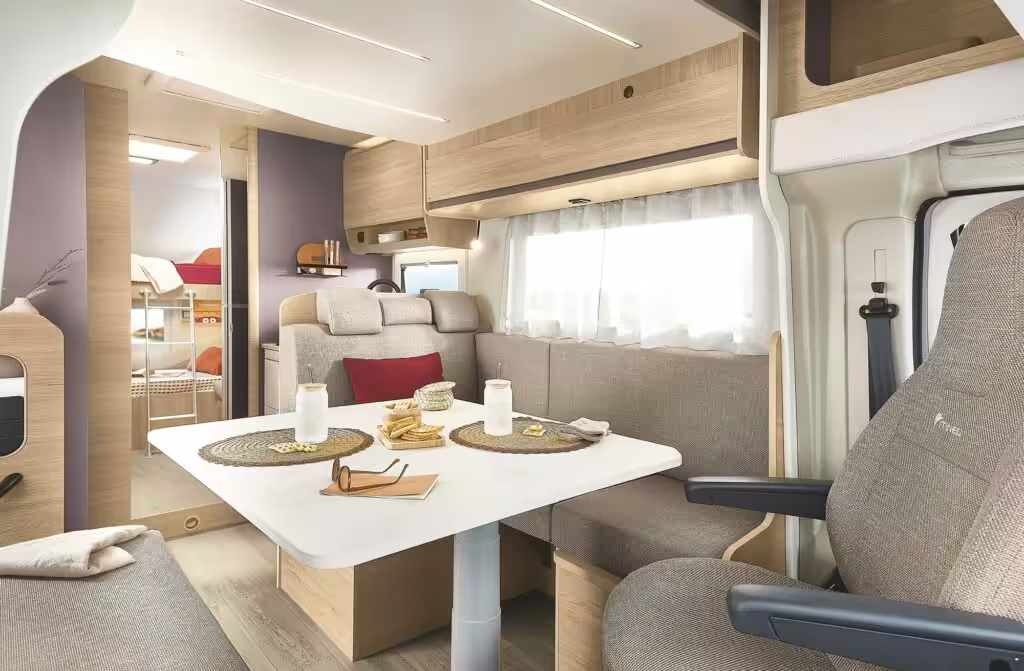
Find Your Family Motorhome at Dicksons of Perth
There is no single vehicle that will suit every family. The best way to choose is to compare layouts in person, sit everyone in their intended travel positions and test how the beds, storage, kitchen and washroom work together. Dicksons of Perth has been helping families choose leisure vehicles since 1958, with a wide selection of new motorhomes, approved used motorhomes, coachbuilt models, A-Class motorhomes and family-friendly options from leading brands. Visit the Perth showroom to compare different family motorhomes, discuss finance and part-exchange options, or explore Dicksons motorhome hire if you would like to try life on the road before you buy.
Frequently Asked Questions
A four-berth motorhome may be suitable, provided it also has four appropriate travel seats. Families wanting more storage or separate sleeping areas may prefer a five or six-berth model.
No. Some habitation seats are not designated travel seats and may not have suitable belts. Always check the vehicle’s approved passenger capacity and individual seating positions.
Layouts with fixed bunks, accessible washroom facilities and forward-facing belted travel seats are often practical. The right option will depend on the children’s ages, their child-seat requirements and how much supervision they need.
